
Digital Menu Board for Cafes and Fast Food: Digital vs Printed
A practical, cost-honest comparison of digital menu boards versus printed menus for cafe and fast-food operators — covering real costs, operational trade-offs, content management, and when each format genuinely makes sense.
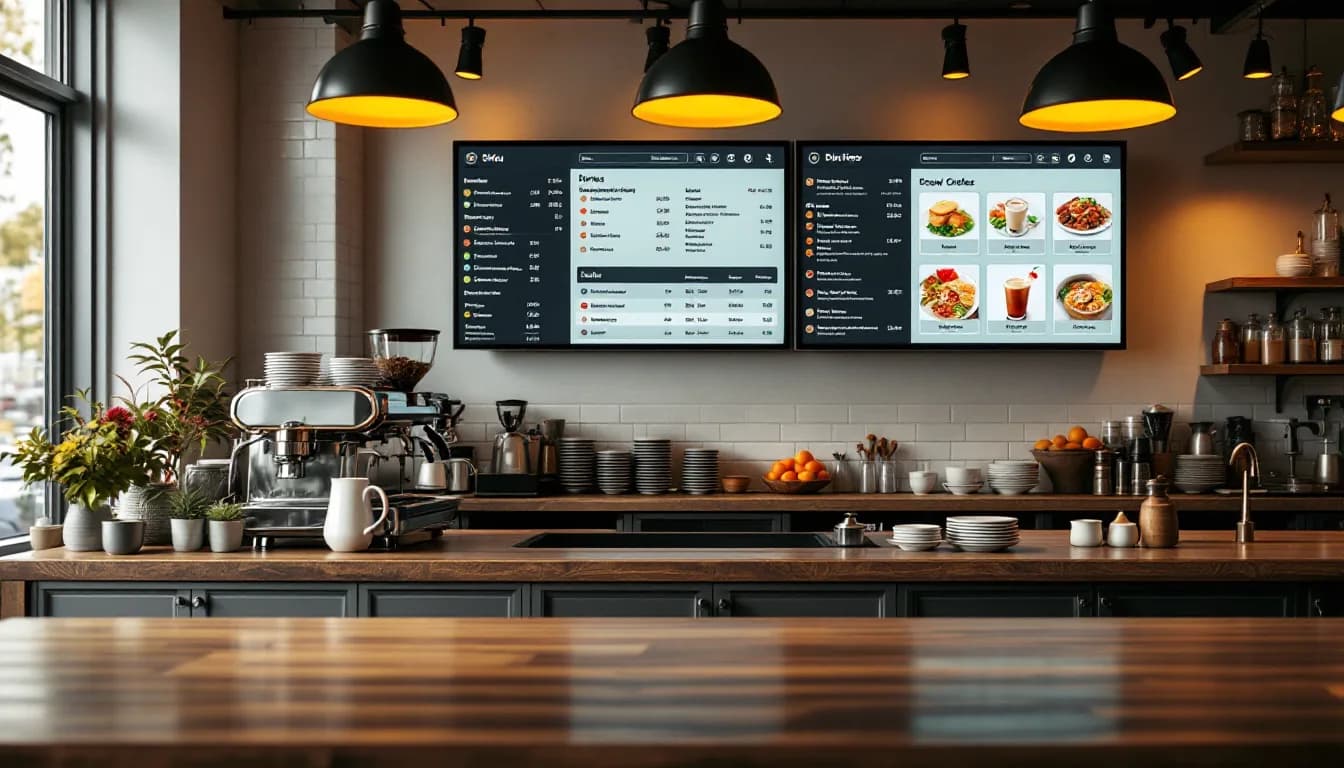
- —Digital menu boards offer operational flexibility, day-parting, and real-time updates; printed menus have lower upfront cost and no hardware dependency.
- —The right choice depends on how frequently your menu changes, your staff capacity to manage digital content, and your budget structure over two to three years.
- —Hidden costs exist on both sides: reprint cycles and outdated stock for print; platform learning, content workflow, and hardware maintenance for digital.
- —Day-parting and per-zone scheduling are the strongest operational arguments for digital in fast-food and multi-zone cafe environments.
- —Hybrid approaches — printed menus for seated guests, digital boards at the counter — are a practical, low-risk transition path.
- —If you add background music to your venue technology stack, you still need your own local PRO licence; the MUSICDJ platform licence and your public-performance licence are separate obligations.
Digital Menu Board vs Printed Menu: What Operators Actually Need to Know
The direct answer is this: a digital menu board gives you greater operational flexibility and long-term control over content, while a printed menu carries a lower upfront cost and no dependency on hardware, power, or software. Neither is universally superior. The right format depends on how your operation actually runs.
This article is a practical trade-off guide, not a pitch for either format. It is written for cafe owners, fast-food operators, and hospitality managers who are evaluating whether to replace or supplement their current printed menus with screen-based displays.
The factors that matter most are update frequency, staff capacity, venue size, and how your budget is structured. We will work through cost, operations, customer experience, content management, and a few compliance points that are easy to overlook.
The Real Costs: Upfront, Ongoing, and Hidden
Cost comparisons between digital and printed menus are often oversimplified. Here is a more complete picture.
Printed menus
- Low cost per print run, particularly for small quantities.
- Reprinting costs accumulate every time prices, items, or branding change. Seasonal menus multiply this significantly.
- Hidden costs include design agency fees for each revision, disposal of outdated stock, and the operational gap when a promotion is running that is not yet reflected on the printed board.
Digital menu boards
- Higher initial investment in screens, mounts, and a content management platform.
- Ongoing costs include software subscription, electricity, and occasional hardware maintenance.
- Hidden costs include staff time to learn the platform, potential downtime if hardware or internet connectivity fails, and the ongoing need for someone to manage content consistently.
The honest framing: for a venue that changes its menu rarely — a neighbourhood cafe with a stable seasonal offering, for example — print may remain cheaper over a two-to-three year horizon. For venues with frequent price changes, daily specials, or multi-daypart menus, digital typically delivers better cost-per-update economics once the initial investment is absorbed.
MUSICDJ Digital Signage operates from a single Backstage dashboard, which reduces the platform learning curve compared to managing multiple disconnected tools. Even so, operators should budget for a content management workflow, not just the software cost.
Operational Flexibility: Updates, Scheduling, and Day-Parting
This is where digital and printed formats diverge most sharply.
Printed menus are static by nature. Any change requires a full reprint cycle, which can take days and creates a window where displayed prices or items are incorrect — a compliance risk in markets with pricing transparency regulations.
Digital menu boards allow instant content updates pushed from a central dashboard. For fast-food operators who need to pull a sold-out item or adjust pricing at short notice, this is a meaningful operational advantage.
Day-parting is one of the strongest practical arguments for digital in cafe and fast-food environments:
- Breakfast, lunch, and dinner menus can switch automatically on a scheduler without any staff intervention.
- Promotional content — happy hour pricing, limited-time offers, seasonal specials — can be activated and deactivated on a precise schedule.
- A cafe with a counter screen and a window-facing screen can show different content simultaneously using per-zone scheduling.
MUSICDJ digital signage for hospitality venues supports per-zone scheduling from the same Backstage dashboard, which is particularly useful for venues that have distinct service areas with different content needs.
Operational risk of digital: if a screen fails or the content management system is temporarily unavailable, the venue needs a contingency. Printed backup menus are a practical fallback that operators should plan for regardless of how reliable their digital setup is.
Printed menus also require physical distribution and collection each time a version changes — an overhead that is easy to underestimate in fast-paced counter-service environments.
Customer Experience: Readability, Engagement, and Decision-Making
Research on retail atmospherics consistently suggests that well-designed visual displays influence purchase decisions and average spend. Operators should test this in their own context rather than rely on generalised claims, but the directional evidence is strong enough to take seriously.
Where digital has an advantage:
- High-contrast, legible typography at scale benefits customers with visual impairments, provided the design is executed correctly.
- Motion and rotating content can draw attention to high-margin items or promotions.
- Fast-food and counter-service formats benefit more from digital boards because customers make quick decisions at the point of order; printed boards in these settings are harder to update and frequently look dated.
- AI-generated menu visuals within the MUSICDJ platform allow operators to produce professional food photography-style imagery without a full production budget, which raises the visual quality of digital boards for operators who lack in-house design resources.
Where print holds its own:
- Printed menus offer tactile familiarity and are perceived as more considered in sit-down cafe environments where guests browse at leisure.
- A well-designed printed menu signals craft and intentionality in venues where that is part of the brand identity.
A caution on digital: excessive animation and rotating content creates visual noise that frustrates customers in a queue. Consistency matters more than dynamism. A digital board with outdated or poorly formatted content creates a worse impression than a clean, well-printed menu.
Content Management: Who Does the Work and How Often
The practical bottleneck for digital menu boards is not the technology. It is the content workflow.
Someone must create, approve, and publish updates. For a small independent cafe, that is usually the owner. For a multi-site fast-food operator, it may be a marketing or operations manager. Either way, the workflow needs to be mapped before committing to a platform.
Key considerations:
- MUSICDJ Backstage centralises content management across zones and locations, reducing the number of systems an operator needs to log into.
- AI menu generation within the platform can accelerate content creation, but operators should review AI-generated content before publishing to ensure accuracy and compliance with local pricing rules.
- Printed menus outsource the design and production burden to a printer, which suits operators who lack in-house design capability — but it removes real-time control entirely.
- Multi-site operators with consistent branding benefit significantly from digital because a single content update can propagate across all locations simultaneously.
Recommendation: before committing to digital, map out who will manage content, how often updates are needed, and whether the platform you choose matches that workflow realistically. A platform that is too complex for your team's capacity will be underused regardless of its feature set.
Music, Atmosphere, and the Broader In-Venue Experience
Menu boards are one element of the overall guest experience. Operators considering a digital upgrade often find it is the entry point to a broader venue technology review.
MUSICDJ combines Digital Signage with background music for cafes and the CONNECT digital menu and guest app on the same Backstage platform. This allows a cafe or fast-food venue to manage both visual and audio atmosphere from one dashboard rather than juggling separate systems.
What CONNECT adds to this picture:
- A no-download guest web app surfaced via QR code, showing the menu, Google review prompts, and now-playing information. This complements rather than replaces physical or digital menu boards.
- PayPlay, part of CONNECT, allows guests to request songs via a paid jukebox — an engagement layer that is relevant in cafe and bar environments where music is part of the atmosphere.
Operators should evaluate honestly whether a standalone digital signage solution or an integrated platform better fits their operational model and growth plans.
A practical note: a single-site independent cafe may not need the full suite. A growing fast-food group with multiple zones and locations gains considerably more from an integrated approach where signage, music, and guest engagement are managed together.
Licensing, Compliance, and What Digital Signage Does Not Cover
Two compliance points that are worth separating clearly.
Music licensing: digital menu boards display content; they do not play music and therefore do not trigger music licensing obligations on their own. If a venue uses MUSICDJ Background Music alongside Digital Signage, the music streaming is licensed for business use through the platform. However, venues are still required to hold their own local public-performance licence from their national collection society — for example, SOKOJ in Serbia, GEMA in Germany, SACEM in France, PRS in the UK, SIAE in Italy, SGAE in Spain, or ZAMP in Croatia. MUSICDJ does not replace or cover this obligation. The platform licence and the PRO licence are separate costs, and operators budgeting a full venue technology rollout should account for both.
Menu content compliance: operators must ensure that displayed prices comply with local consumer protection and pricing transparency regulations. This is an operational responsibility regardless of whether the format is digital or printed. Digital boards make it easier to keep prices current, but the responsibility for accuracy sits with the venue.
When to Choose Digital, When to Stay Printed, and When to Use Both
Choose a digital menu board when:
- Menu changes are frequent — daily specials, seasonal rotations, or regular price adjustments.
- Day-parting is operationally valuable and you want automatic scheduling rather than manual menu swaps.
- The venue has multiple zones or locations that need consistent, centrally managed content.
- Promotional content needs to be time-sensitive and activated or deactivated on a precise schedule.
Stay with printed when:
- The menu is stable and changes rarely — quarterly or less.
- The venue's brand identity relies on a tactile, artisanal aesthetic where a printed menu is part of the experience.
- The operator lacks the internal capacity to manage digital content consistently; an unmaintained digital board is worse than a clean printed one.
Use both when:
- A printed menu serves as the detailed browsing tool for seated guests, while a digital board at the counter highlights specials, pricing, and promotions in real time.
- The venue is transitioning to digital and wants to reduce risk by running both formats in parallel before committing fully.
- Different service areas have different customer behaviours — a hybrid approach maps format to function.
Hybrid approaches are common in established cafes and mid-size fast-food operations. They allow operators to test digital content management in practice before making a full commitment.
The decision should be driven by operational reality, not by the assumption that digital is inherently more modern or effective. Both formats have a legitimate place in hospitality, often within the same venue.
Digital Menu Board vs Printed Menu: Side-by-Side
| Dimension | Digital Menu Board | Printed Menu |
|---|---|---|
| Upfront cost | Higher — screens, mounts, platform | Lower — design and print run |
| Ongoing cost | Software subscription, electricity, maintenance | Reprint fees on each revision |
| Update speed | Instant from dashboard | Days — full reprint cycle required |
| Day-parting | Automatic via scheduler | Not possible without staff intervention |
| Multi-zone control | Per-zone scheduling from one dashboard | Separate physical print per zone |
| Multi-site rollout | Single update propagates to all locations | Requires reprinting and distributing to each site |
| Content management burden | Ongoing — requires internal workflow | Outsourced to printer per revision |
| Visual quality | High if well designed; AI visuals available | High if professionally designed; static |
| Hardware dependency | Yes — screens, power, internet | None |
| Failure contingency needed | Yes — printed backup recommended | No |
| Brand aesthetic fit | Strong for counter-service and fast food | Strong for artisanal, sit-down cafe formats |
| Compliance (pricing accuracy) | Easier to keep current | Risk of outdated prices between reprints |
| Music licensing impact | None — signage does not trigger PRO fees | None |
Frequently asked questions
Does a digital menu board replace the need for a printed menu entirely?
Not necessarily, and for many venues it should not. Printed menus remain valuable for seated guests who browse at leisure, and they serve as a practical contingency if a screen fails or the content management system is temporarily unavailable. Many operators run both formats, using digital boards at the counter for specials and pricing, and printed menus at the table for the full offering.
How often do I need to update content on a digital menu board?
That depends entirely on your operation. A cafe with a stable menu may update content seasonally. A fast-food venue with daily specials or multi-daypart menus may update content every day. Before committing to digital, map out your actual update frequency and make sure you have the internal capacity — or a clear workflow — to manage it consistently.
Does MUSICDJ Digital Signage cover music licensing for my venue?
No, and this distinction is important. MUSICDJ Background Music is licensed for business use through the platform, but your venue is still required to hold its own public-performance licence from your national collection society — for example, PRS in the UK, GEMA in Germany, SACEM in France, or SOKOJ in Serbia. The MUSICDJ platform licence and your PRO licence are separate obligations. Digital Signage on its own does not play music and therefore does not trigger music licensing requirements.
Can I manage digital menu boards across multiple cafe locations from one place?
Yes. MUSICDJ Backstage centralises content management across zones and locations, so a single content update can be pushed to multiple sites simultaneously. This is one of the strongest operational arguments for digital in multi-site fast-food and cafe group environments.
What happens if my screen goes offline or the internet drops?
This is a genuine operational risk that operators should plan for. Keeping a printed backup menu available is a practical and straightforward contingency. Before deploying digital boards, confirm your hardware reliability, your internet redundancy, and what your fallback procedure will be if a screen is unavailable during service.
Is a digital menu board the same as a QR code menu?
No. A digital menu board is a screen-based display, typically mounted at the counter or on a wall, showing menu content to all customers in the venue. A QR code menu is a guest-facing tool accessed on the customer's own device. MUSICDJ CONNECT provides a no-download guest web app via QR code that surfaces the menu, Google review prompts, and now-playing information — this complements a digital menu board rather than replacing it.
See How MUSICDJ Digital Signage Works in Practice
If you are evaluating digital menu boards for your cafe or fast-food venue, the Backstage dashboard is the practical starting point. Manage menu content, schedule day-parting, and control per-zone displays from one place — alongside background music and guest engagement tools if you need them.
Get Started with MUSICDJ