
Background Music for Gyms and Fitness Studios: A Practical Buyer's Guide
A practical buyer's guide for gym owners and fitness studio managers covering licensing obligations, zone control, scheduling, audio branding, and how to evaluate a purpose-built commercial gym music system against your venue's real needs.
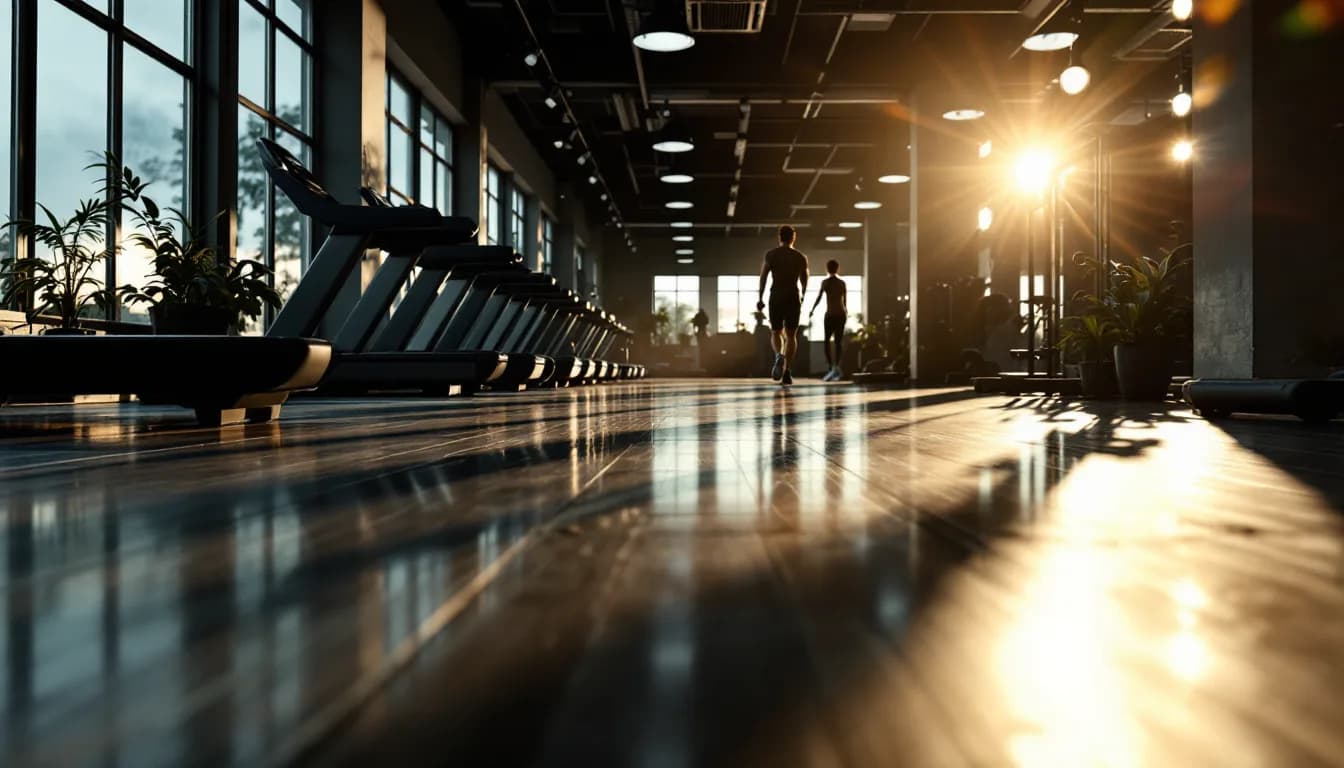
- —Consumer streaming apps are licensed for personal use only — playing them in a gym is a licensing violation regardless of subscription tier.
- —A commercial music platform licence does not replace your venue's own public-performance obligation with the relevant PRO in your territory.
- —Multi-zone audio control is essential for gyms: a single playlist cannot simultaneously serve a HIIT studio and a recovery lounge.
- —Day-parting schedulers automate energy shifts throughout the day without requiring staff to manage music manually on the floor.
- —AI-generated jingles make audio branding accessible to independent studios and multi-site chains alike.
- —Evaluate platforms on commercial licensing, zone depth, hardware flexibility, remote management, and expandability before committing.
Why a Gym Music System Is Not the Same as a Playlist App
The distinction matters from day one. Consumer streaming services — Spotify, Apple Music, YouTube, and their equivalents — are licensed exclusively for personal, non-commercial listening. Playing them through a speaker in a gym, regardless of which subscription tier you hold, constitutes a licensing violation. The terms of service are unambiguous on this point, and ignorance of the clause is not a defence that holds up when a PRO inspector visits.
A purpose-built commercial gym music system is a different category of product entirely. It provides:
- A music library licensed for business use in a public-performance context
- Multi-zone audio routing so different areas of the venue receive different content simultaneously
- A scheduling engine that automates energy shifts throughout the operating day
- Remote management tools accessible from a phone or tablet on the gym floor
None of these capabilities exist in consumer apps, because consumer apps were never designed for them.
The practical question for a gym owner or fitness studio manager is therefore not whether to invest in a commercial solution — that decision is made for you by law and by operational necessity. The question is which platform fits your venue's size, zone complexity, and management style. This guide covers the four areas that matter most: licensing obligations, zone control, scheduling and audio branding, and a checklist for evaluating platforms including background music for businesses like MUSICDJ.
Understanding Your Licensing Obligations Before You Buy Anything
Licensing in a commercial music context operates in two distinct layers, and confusing them is the single most expensive mistake gym operators make.
Layer one: the platform licence. A commercial music streaming platform — MUSICDJ included — holds a business-use licence covering the right to stream its catalogue to venues. This is what separates it from a consumer app.
Layer two: your venue's public-performance licence. This is your responsibility as the operator, and it exists independently of whatever platform you subscribe to. You must register with and pay the relevant collecting society in your territory:
- Serbia: SOKOJ
- Germany: GEMA
- France: SACEM
- United Kingdom: PRS for Music and PPL
- United States: ASCAP, BMI, and/or SESAC
- Italy: SIAE
- Spain: SGAE
- Croatia and Slovenia: ZAMP
A subscription to a commercial music platform does not remove, reduce, or replace this obligation. The two licences serve different legal purposes and are administered by different bodies. Any vendor that implies otherwise — through phrases like "all-in licensing" or "no PRO fees" — is giving you information that will leave you exposed.
Practical steps before launch:
- Identify the relevant PRO for your country and territory.
- Contact them before you open or before you switch to a new music system.
- Declare your floor area, the number of zones you intend to operate, and your typical attendance capacity — these factors typically determine your annual fee.
- Budget the PRO fee as a fixed operational cost, in the same category as insurance or utilities.
Penalties for unlicensed public performance can include back-payments calculated from the date the infringement began, administrative fines, and — in some jurisdictions — legal proceedings. For a small independent studio, a multi-year back-payment demand is a serious financial event. Register before you play, not after.
Zone Control: Matching the Music to the Space
Audio zoning is the ability to send different playlists, at different volumes, on different schedules, to distinct physical areas of a venue — all managed simultaneously from one dashboard.
For a gym or fitness studio, zoning is not a luxury feature. It is an operational requirement. Consider the acoustic and atmospheric needs of a typical multi-area facility:
- Main training floor: high-energy tracks with consistent, elevated BPM to sustain effort during open gym sessions
- Free-weights area: motivational and driving, but with enough sonic space that members can concentrate
- Cardio deck: rhythmically consistent programming that matches machine cadence without being distracting
- Group-class studios: instructor-led sessions that may require independent control, separate from the rest of the venue
- Reception and lobby: welcoming, moderate intensity — the first impression a member or prospect receives
- Changing rooms: ambient and lower in volume, conversational rather than energising
- Café or recovery lounge: relaxed programming at a volume that allows conversation
A single-zone system playing one playlist at one volume level cannot serve all of these spaces. The HIIT studio and the recovery lounge require fundamentally different sonic environments, and attempting to compromise between them serves neither well.
MUSICDJ's per-zone playlist and scheduling tools address this directly. Each zone is configured independently within the Backstage dashboard, with its own playlist assignment, volume profile, and day-part schedule. Changes made to one zone do not affect others.
On the hardware side, MUSICDJ runs on Android, Windows, and Web players. This means gyms can use existing devices or low-cost consumer hardware for each zone, without being locked into proprietary equipment that becomes a dependency on a single vendor.
Day-Parting and Scheduling: Automating the Atmosphere
Day-parting is the practice of automatically shifting music energy and tempo to match the natural rhythm of the venue throughout the operating day — without requiring any manual intervention from staff.
In a gym context, a well-configured day-part schedule might look like this:
- Early morning (6:00–8:00): moderate-energy, positive tracks that ease members into their session without overwhelming those who are still waking up
- Peak lunchtime (12:00–14:00): high-intensity playlists aligned with the compressed workout windows of office-hour members
- After-work peak (17:00–20:00): the busiest period in most gyms, calling for the most energising programming of the day
- Late evening (20:00–close): a gradual wind-down that matches the lower footfall and the different mood of evening members
- Weekend timetable: a distinct schedule that reflects the different footfall patterns and class timetables of Saturday and Sunday
Once configured in the Backstage scheduler, this runs autonomously. No staff member needs to manage a phone, laptop, or speaker system on the floor. The right music plays in the right zone at the right time, every day, without a daily task on anyone's checklist.
MUSICDJ's scheduler also supports web radio as a content source alongside curated playlists, giving operators a live-broadcast option for zones where a continuous, externally programmed stream is preferable.
The connection to member experience is worth stating plainly: consistent, well-timed music programming is one of the quietest contributors to perceived professionalism in a fitness venue. Members may not consciously notice it, but they notice when it is absent or wrong.
AI Jingles and Audio Branding for Fitness Venues
Background music sets the atmosphere. Audio branding builds identity. The distinction matters for gyms that want members to associate a sound — not just a logo — with their experience of the venue.
AI-generated jingles and audio branding through MUSICDJ allow operators to produce custom audio without engaging a recording studio or external production agency. Jingles are generated in real time through the platform and can be integrated directly into the day-part schedule.
Practical applications in a gym environment include:
- Class announcements: a branded audio cue signalling that a group session is starting in five minutes, played in the relevant zone
- Promotional messages: membership offer audio that plays at peak footfall moments — lunchtime and after-work peaks — when prospects are most likely to be on-site
- Seasonal campaigns: audio for January new-member drives, summer challenges, or anniversary promotions, produced quickly without a production budget
- Branded intros: short gym-branded audio identifiers that play between tracks, reinforcing the venue's identity throughout the session
Because jingles are inserted at defined times within the scheduler, promotional audio reaches members when it is most relevant — not at random, and not because a staff member remembered to press play. For independent studios operating without a marketing team, this makes audio branding practically achievable for the first time.
Remote Control and Staff Management
The operational reality of a gym is that the person responsible for the music environment is rarely sitting at a desktop. They are coaching a class, assisting a member on the floor, or managing reception.
MUSICDJ's remote apps — available on iOS, Android, and Web — allow authorised staff to adjust volume, skip tracks, switch playlists, or change zones from anywhere in the venue. A group-class instructor can take control of their studio zone from their phone without touching the main system. A manager can override a zone remotely if a complaint comes in.
For gym chains and franchise operators, multi-site management is handled from a single Backstage login. Each location and each zone within each location is accessible from one interface, with per-venue and per-zone granularity. A regional manager can audit the music environment across ten clubs without visiting any of them.
Role-based permissions mean that access is proportionate to responsibility. An instructor controls only their studio. A floor supervisor controls the main training areas. The venue manager controls everything. No consumer playlist app offers this structure — because it was never designed to be operated by a team across multiple spaces.
Digital Signage Integration: Screens That Work as Hard as the Music
Music shapes how a member feels in a space. Screens shape what they know and what they do next. In a gym environment, the two work best when they are managed together.
Digital signage for fitness venues through MUSICDJ allows operators to display class timetables, membership promotions, nutritional offers, and motivational content on venue screens — scheduled per zone and managed from the same Backstage dashboard as the music.
Gym-specific signage applications include:
- Reception and entrance: class schedule boards, membership offer screens, and welcome messaging for new members
- Training floor: motivational visuals and challenge leaderboards that reinforce the energy the music creates
- Café or supplement counter: product promotions, nutritional information, and offer screens timed to post-workout footfall
- Corridor and transition spaces: event announcements, PT availability, and community content
MUSICDJ's AI visual generation tools allow operators to produce custom promotional graphics without a graphic design budget. An independent studio that cannot afford a designer can still run a professional-looking promotional campaign across its screens.
The operational efficiency argument is straightforward: managing music and signage from one dashboard means one vendor relationship, one support contact, one login, and one billing relationship. For operators already stretched across the demands of running a fitness business, consolidation has real value.
Evaluating a Gym Music System: A Practical Checklist
Before committing to any platform, assess it against these eight criteria:
1. Commercial Licensing
Does the platform hold a business-use licence for its music library? If the answer is unclear or the vendor cannot produce documentation, eliminate it from consideration immediately. This is the non-negotiable baseline.
2. Zone Support
How many independent zones can the system manage simultaneously? Is there a per-zone cost structure that scales unexpectedly as you add areas? Understand the full cost at your intended zone count before signing.
3. Scheduling Depth
Can the system automate day-part programming across all zones without requiring daily manual input? A scheduler that requires staff to intervene each morning is not a scheduler — it is a reminder system.
4. Hardware Flexibility
Does the platform require proprietary playback hardware, or does it run on standard Android, Windows, or Web devices? Proprietary hardware creates vendor lock-in and increases replacement costs. MUSICDJ runs on standard devices, which means gyms can use existing equipment or source affordable hardware independently.
5. Remote Management
Is there a mobile app for on-floor control? Does it support multiple users with role-based access? A system that can only be managed from a fixed desktop is not suited to a gym environment.
6. Audio Branding
Can the platform generate and schedule jingles and announcements, or is it music-only? For gyms that want to run promotional audio or class announcements, this capability needs to be native to the platform rather than bolted on from a separate tool.
7. Expandability
Can the same platform grow to cover Digital Signage, IPTV, or guest-facing features if your business evolves? A gym that adds a café, a recovery spa, or accommodation needs a platform that can scale with it rather than requiring a replacement. CONNECT guest engagement tools and Digital Signage are available within the MUSICDJ ecosystem if your model expands in that direction.
8. Support and Uptime
What is the vendor's support model? What happens if the system goes offline during the Saturday morning peak — the busiest two hours of your week? Understand the escalation path and the expected response time before you depend on the platform.
Before you go live: trial the platform in a single zone — the main training floor or reception — before rolling it across the venue. This allows you to assess reliability, audio quality, and ease of management under real operating conditions. And regardless of which platform you choose, ensure your PRO registration is in place before the first day of commercial play.
See MUSICDJ pricing to understand the cost structure across zone counts and feature sets, or get started with MUSICDJ to configure your first zone.
Consumer Streaming App vs. Purpose-Built Commercial Gym Music System
| Feature | Consumer Streaming App | Commercial Gym Music System (e.g. MUSICDJ) |
|---|---|---|
| Business-use licence | No — personal use only; commercial play is a licence violation | Yes — library licensed for business/public-performance contexts |
| Replaces PRO obligation | No | No — venue must still register and pay its local PRO independently |
| Multi-zone audio routing | No — single stream only | Yes — independent playlists, volumes, and schedules per zone |
| Day-part scheduling | No — manual playlist changes only | Yes — fully automated across all zones from one dashboard |
| Remote management app | Basic playback controls only; no zone or permission management | iOS, Android, and Web remote apps with role-based staff access |
| Multi-site management | No | Yes — all locations and zones from a single Backstage login |
| AI jingle and audio branding | No | Yes — real-time AI jingle generation schedulable within day-parts |
| Digital Signage integration | No | Yes — screens managed from the same Backstage dashboard |
| Hardware requirements | Requires platform-specific device or app | Runs on standard Android, Windows, or Web devices |
| Staff permission levels | No | Yes — granular role-based access per zone and per location |
Frequently asked questions
Is a commercial music platform subscription enough to cover all my licensing obligations as a gym?
No. A commercial music platform — including MUSICDJ — holds a business-use licence for its catalogue, which authorises it to stream music to venues. However, you as the venue operator must separately register with and pay your local public-performance collecting society (PRO). In the UK this means PRS for Music and PPL; in the US, ASCAP, BMI, and/or SESAC; in Germany, GEMA; in France, SACEM — and so on. The two licences serve different legal purposes and neither replaces the other. Contact your local PRO before you begin commercial play.
Can I use Spotify or Apple Music in my gym if I have a paid subscription?
No. Both Spotify and Apple Music are licensed for personal, non-commercial use only. Their terms of service explicitly prohibit public performance in a commercial setting, regardless of subscription tier. Playing either service in a gym — even through a premium account — constitutes a licensing violation and exposes the venue to back-payments and fines from the relevant collecting society.
How many zones does a typical gym need?
This depends on the layout and the diversity of activities the venue hosts. A small single-room studio may operate effectively with one or two zones. A mid-size gym with a main floor, a group-class studio, reception, and changing rooms typically benefits from four to six independent zones. Larger multi-activity facilities with a café, cardio deck, free-weights area, and outdoor space may require more. The key principle is that any two areas with meaningfully different atmospheric needs — in terms of energy, volume, or audience — justify separate zone treatment.
What hardware do I need to run MUSICDJ in a gym?
MUSICDJ runs on standard Android devices, Windows computers, and Web browsers. There is no proprietary playback hardware requirement. This means you can use devices you already own or source affordable consumer-grade hardware for each zone, connecting it to your existing speaker infrastructure. Each device serves as the player for one zone.
Can MUSICDJ handle music for a gym that also has a café or hotel-style accommodation?
Yes. MUSICDJ is a multi-product platform designed for hospitality and fitness venues. Background Music, Digital Signage, and CONNECT guest engagement tools can all be managed from the same Backstage dashboard. If your facility includes accommodation, the STAY product covers in-room guest TV, a branded guest app, and direct booking integrations. You are not required to use all products — you can start with background music and expand as the business grows.
What happens to the music if the system goes offline?
This is an important question to ask any vendor during evaluation. Understand the platform's offline behaviour — whether cached content continues to play during a connectivity interruption, and what the process is for restoring full functionality. Also clarify the vendor's support response time for outages, particularly during peak operating hours. These are practical due-diligence questions that should be answered before you depend on any system commercially.
Ready to Build a Proper Gym Music System?
Configure your zones, set your day-part schedules, and manage every area of your venue from one dashboard. MUSICDJ runs on the hardware you already own, scales from a single studio to a multi-site chain, and gives you the audio branding tools to make your venue sound as professional as it looks. Remember to register with your local PRO before your first day of commercial play — then let the system handle the rest.
Get Started with MUSICDJ